


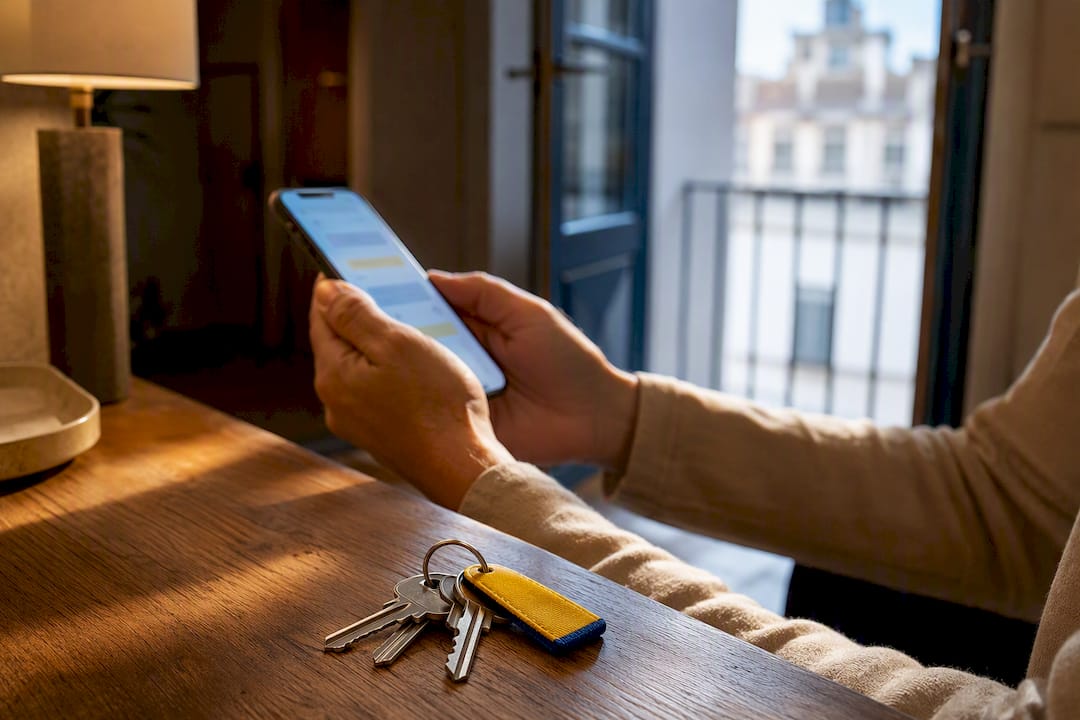
Five templates cover nearly every check-in scenario a host faces: a booking confirmation, a pre-arrival message, a day-of note, a short access-only text, and an automated version that links to your full guest guide. Pick the one that matches your guest’s stage in the stay, copy the text from the templates below, and set its trigger time so it sends itself.
TL;DR:
- Sending access codes early increases the risk of forwarding or forgetting, so activate codes only on the check-in date through configurable time windows.
- The pre-arrival message must clearly state the arrival window, location cue, exact access steps, Wi-Fi details or guide link, and emergency contact for effective communication.
- Personalization relies on merge fields such as guest name, arrival date, and language preference, which should be tested via a trial reservation to ensure accuracy.
- Automated platforms help schedule messages, sync calendar bookings, and handle regulatory guest data reporting, reducing manual work and compliance risks.
- Clarity and timing are more important than tone, with testable templates preventing miscommunication; details like codes should be in the first lines for quick visibility.
Table of Contents
- What Every Check-In Message Must Include
- Ready-to-Use Check-In Message Templates by Moment
- When to Send Each Message: Timing and Trade-offs
- Personalizing Check-In Messages Without Extra Manual Work
- Setting Up Merge Fields and Testing Your Templates
- Guest Data Rules Hosts Need to Know Before Sending Messages
- Why Clear Check-In Messages Save Hosts More Than Time
- A Compliant Check-In Tool Does More Than Send Templates
- Sources
- FAQ
What Every Check-In Message Must Include
A check-in message fails for one of two reasons: it is missing a critical detail, or the guest cannot find that detail fast enough on a phone screen. Before you send anything, run it against this checklist.
Every message needs five components to actually do its job:
- Arrival window and code timing. State the exact check-in window (e.g., “3:00 PM to 8:00 PM”) and, separately, when the access code becomes active. Guests confuse these two constantly.
- A location cue, not just an address. One line of plain-language direction (“the blue door next to the pharmacy”) saves more confused phone calls than a pin drop ever will.
- Exact access steps. Number them if there is more than one step: unlock the gate, then the front door, then the apartment. Vague instructions like “use the code to get in” force guests to guess.
- A guide link or Wi-Fi details. Either drop the Wi-Fi name and password directly into the message, or link to a digital guide that holds everything else, appliance instructions, parking, house rules, so the message itself stays short.
- An emergency contact. One phone number or messaging channel, clearly labeled, for anything urgent after hours.
A sixth item matters more than most hosts realize: what you leave out. Full ID numbers, passport details, or other sensitive guest data should never travel through a public chat thread. That kind of information belongs in a secure registration form, not a text message, both for the guest’s privacy and because Real Decreto 933/2021 treats that data as regulated. More on that in the regulatory section below.
Pro Tip: Read your own check-in message on a phone screen, not a desktop monitor, before you save it as a template. If the access code and arrival window aren’t visible without scrolling, move them to the first two lines.
The order matters as much as the content. Guests skim. Put the access code and arrival window first, the location cue second, and the “nice to have” material like parking tips or restaurant suggestions last. That structure alone fixes most “I couldn’t find the code” complaints.
Ready-to-Use Check-In Message Templates by Moment
Below are six templates covering the full arc of a guest’s stay, from the second they book to the moment they walk in. Copy the wording, swap in your property details, and adjust tone to match your voice.
1. Booking confirmation (send immediately)
This is the first message a guest sees, so it sets the tone for everything after it.
Hi [Guest Name], thanks for booking [Property Name]! We’re looking forward to hosting you from [Check-in Date] to [Check-out Date]. You’ll get full check-in details 3 days before arrival. If you have questions before then, just reply here.
2. Pre-arrival message (send a few days before)
This is the longest message in the sequence and the one guests actually read closely, since it is their planning document for arrival day.
Hi [Guest Name], your stay at [Property Name] is coming up! Here’s what you need to know: Address: [Full Address] Check-in window: [Start Time] to [End Time] on [Date] Parking: [Parking Instructions] Access: Your door code ([Access Code]) activates at [Time] on your check-in date. Guide: Full house guide and Wi-Fi info here: [Guide Link] Questions before you arrive? Just message us.
3. Day-of message (send the morning of arrival)
Keep this one short. The guest already has the full details from the pre-arrival message; this is a reminder, not a repeat.
Good morning [Guest Name]! Just a reminder your check-in window opens at [Time] today. Your access code is [Access Code], and it’s active now. Safe travels, see you soon.
4. Access-only short message (for instant or same-day bookings)
When a guest books last-minute or simply needs the fastest possible path to the door, cut everything but the essentials.
[Property Name] access: Address is [Address]. Door code: [Code]. Wi-Fi: [Network] / [Password]. Message us if anything doesn’t work.
5. Warm welcome message (send within an hour of check-in)
A short, friendly note after the guest has likely already settled in performs better than one sent the moment they arrive, when they’re still juggling luggage.
Hi [Guest Name], hope you got in okay! Everything working as expected? We’re here if you need anything during your stay, just reply to this message anytime.
6. Automated multilingual short version
For guests whose language preference you’re unsure of, a two-line bilingual version reduces confusion without requiring a full translation of every template.
Check-in code / Código de acceso: [Code] Address / Dirección: [Address] Guide / Guía: [Link]
These six cover the sequence most hosts need, and the pattern lines up with the six-touchpoint automated messaging flow that many booking platforms and channel managers now build in as a default: booking confirmation, pre-check-in, check-in day, mid-stay, checkout reminder, and post-stay follow-up. If you manage more than a couple of properties, that consistency is what keeps your response times fast without you personally typing every message.
When to Send Each Message: Timing and Trade-offs
Timing isn’t a minor detail here; it’s the difference between a guest who feels prepared and one who’s calling you from the curb. Four trigger points cover almost every stay:
- Immediate (booking confirmation): Sent the moment a reservation is confirmed, mainly to reassure the guest and set expectations for what comes next.
- a few days before arrival (pre-arrival message): This window gives guests enough lead time to plan transportation and parking, but it’s close enough to arrival that the details stay fresh in their mind.
- Morning of arrival (day-of message): A short reminder, not a data dump. By this point, guests should already have everything they need; this message is reassurance, not information.
- 24 to 36 hours after check-in (mid-stay check-in): A quick “how’s everything going” message. It catches small problems (a broken appliance, a confusing thermostat) before they turn into a bad review.
Access-code timing carries its own trade-off between convenience and security. Sending the code too early, say, a week before arrival, increases the risk it gets forwarded, screenshotted, or simply forgotten and left visible in an old message thread. Configurable access windows that activate the code only on the check-in date solve this: guests get the same convenience without the code sitting active and exposed for days.
Last-minute changes need a fallback rule, not a manual scramble. If a guest books within 24 hours of arrival, skip the pre-arrival message entirely and send the access-only short template immediately. For no-shows, set a trigger two hours past the check-in window’s end to send a check-in message asking if everything is on track, which catches lockouts before they become 10 PM phone calls.

Personalizing Check-In Messages Without Extra Manual Work
Personalization doesn’t mean writing every message from scratch. It means building templates with the right variables so the same message reads correctly for a business traveler in Madrid and a family arriving from abroad.
A handful of fields do most of the work:
- Guest name and arrival date, pulled automatically from the reservation.
- Trip purpose, when your booking platform captures it, lets you swap tone: a business guest gets a shorter, more efficient message; a leisure guest or family gets a slightly warmer one with local tips.
- Language preference, either set by the guest or inferred from their booking platform locale, determines whether they get the full-language template or the bilingual short version.
- Length of stay changes what’s worth including. A one-night guest doesn’t need trash pickup schedules; a two-week guest does.
For guests whose language you can’t confirm, default to the bilingual short template rather than gambling on English. It’s a small adjustment that consistently reduces the “I don’t understand the code” follow-up messages that eat into a host’s evening.
Pro Tip: Keep one line reserved for a personal touch, a restaurant recommendation, a note about the neighborhood, that changes based on season or guest type. It costs nothing to automate and it’s the detail guests mention in reviews.
Setting Up Merge Fields and Testing Your Templates
Templates are only as reliable as the data feeding into them. A merge field is a placeholder, like [Access Code] or [Wi-Fi Password], that automatically pulls from your property’s saved details every time a message triggers. Get the setup right once, and every future guest gets an accurate message without you touching a thing.
- Map your merge fields to property-level data. Door code, Wi-Fi name and password, parking instructions, and guide link should all live in your property profile, not typed into each message individually. When you update the door code after a lock change, it should update everywhere automatically.
- Create a test reservation. Book your own listing or use a sandbox reservation if your platform offers one, then walk through the entire message sequence as a guest would receive it.
- Verify code activation timing. Confirm the access code actually activates when your trigger rule says it should, not a day early or late.
- Check every link. Click the guide link, the Wi-Fi QR code if you use one, and any external map link, from a phone, not a desktop.
- Run the language check. If you offer multilingual templates, send a test in each language to confirm nothing renders as a blank field or broken placeholder.
Mobile formatting deserves one more pass here. Long paragraphs collapse into unreadable blocks on a phone screen, so keep line breaks between each piece of information, exactly as shown in the templates above, rather than a solid wall of text.
Guest Data Rules Hosts Need to Know Before Sending Messages
Spain’s Real Decreto 933/2021 requires anyone operating a lodging activity to record guest data and, in many cases, transmit it electronically to authorities within set timeframes. Some communications must go out immediately or within 24 hours of a guest’s arrival. This isn’t a suggestion buried in fine print; it’s a binding obligation tied directly to how hosts collect and handle traveler information.
The practical takeaway for your check-in messages is simple: never ask guests to send full ID numbers, passport scans, or other regulated personal data through a standard chat or SMS thread. That data needs to move through a secure channel built for it.
Two things follow from that rule:
- The Ministry of Interior’s electronic procedure portal is the authenticated route for submitting lodging-related guest data, and it’s the channel your reporting obligations ultimately route through.
- If you’re collecting ID details as part of check-in, use a secure online form or a compliant check-in tool rather than a chat app, both to protect the guest and to keep your own paperwork defensible if it’s ever reviewed.
Keeping your check-in messages focused on access logistics, and routing anything regulatory through a proper channel, keeps both your guest communication and your compliance clean.
Why Clear Check-In Messages Save Hosts More Than Time
Clarity, timing, and testability are the only three things that matter in a check-in message. Everything else, tone, personality, brand voice, is decoration on top of those three. A message can be warm and still fail if the access code is buried in paragraph three.
The pattern that shows up again and again in guest complaints isn’t rudeness or bad instructions. It’s information arriving at the wrong time. A code sent a week early gets forgotten. A guide link sent the morning of arrival, when a guest is already mid-flight with no signal, might as well not exist. Hosts who treat timing as seriously as content tend to see fewer “where’s my code” messages and, not coincidentally, fewer three-star reviews citing “communication was confusing.”
Testability is the piece hosts skip most often, and it’s the one that actually catches the mistakes. A template with a broken merge field looks fine in your editor and useless the moment a real guest opens it on their phone. Book your own property once and read every message as a stranger would.
Start this week with one change: audit your current pre-arrival message against the checklist above. If the access code isn’t in the first two lines, move it.
— Sofía Herrera
A Compliant Check-In Tool Does More Than Send Templates
Copying and pasting these templates gets you most of the way there, but manually tracking trigger timing, merge fields, and guest data compliance across multiple bookings adds up fast, especially once you’re managing more than one property. There are platforms built specifically for hosts who want that automation handled without hiring an IT person or building spreadsheets to track which code goes to which guest.
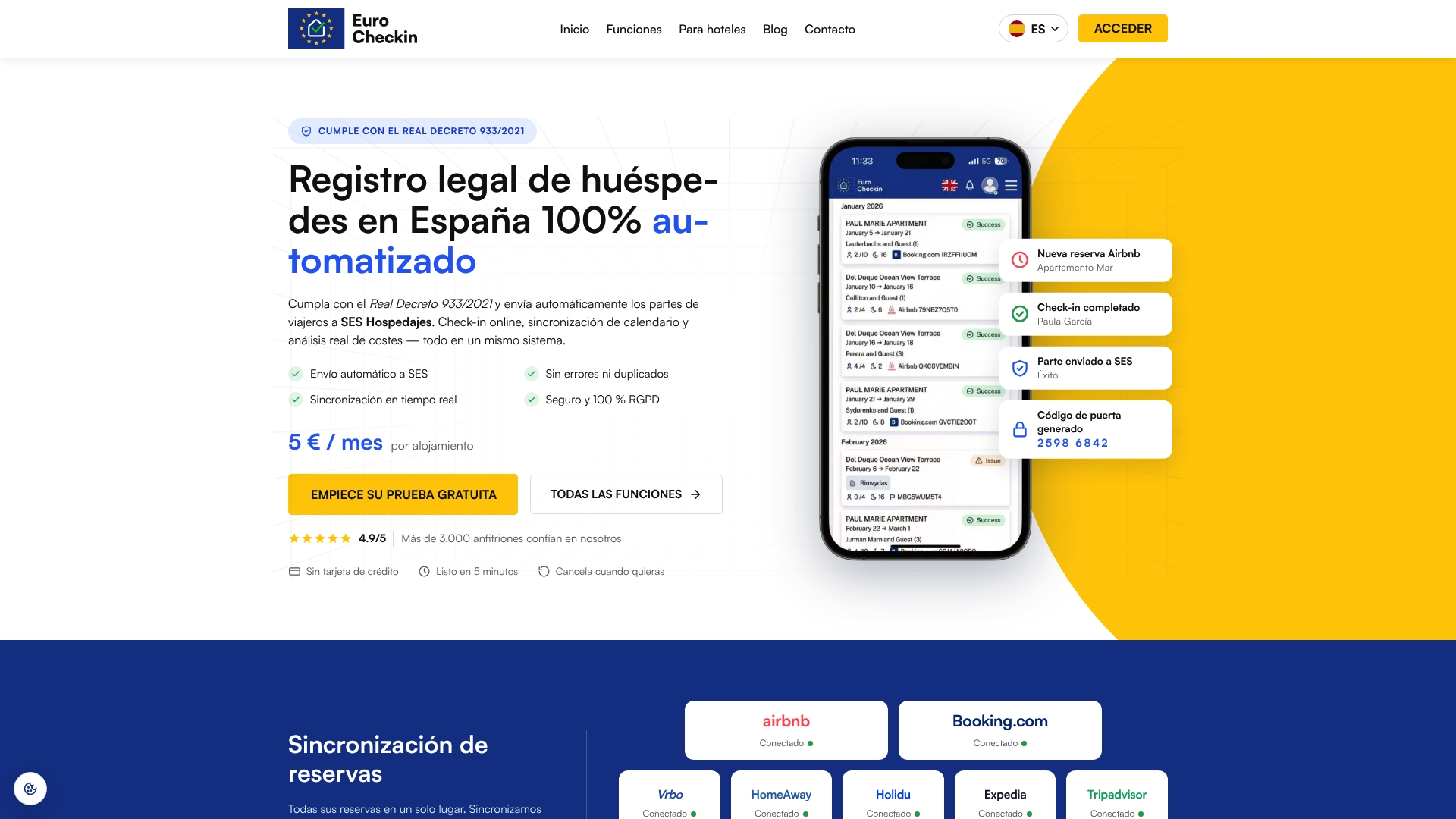
Some platforms send timed check-in messages automatically, sync calendars across multiple booking platforms to prevent overbooking, and connect with smart locks to enable self check-in without handing over a physical key. Some platforms also handle the regulatory side: guest data is transmitted automatically to SES Hospedajes in line with Real Decreto 933/2021, instead of sitting in a chat thread you have to remember to report manually. If you want to see how the online check-in and compliance features work for your specific setup, Eurocheckin offers a free trial so you can test the templates and automation against your own property before committing to a plan.
Sources
For the regulatory details covered above, see Real Decreto 933/2021 on the BOE and the Ministry of Interior’s lodging procedures portal. For additional template examples and messaging workflows, see Amenitiz’s ready-to-use guest message templates and ValtaRealty’s guide to automating vacation rental check-in.
- Real Decreto 933/2021 (BOE) — obligations of registration and communication for lodging activities
- Ministerio del Interior — procedures for lodging and vehicle rentals
- Staystra
FAQ
What is a good check-in message to send a guest?
A good check-in message leads with the access code and arrival window, adds a short location cue, and links to a fuller guide instead of cramming every detail into one text.
How do I make a check-in message template?
Start with a fixed structure (arrival window, access steps, contact info), replace the changing details with merge fields like [Guest Name] and [Access Code], then test it against a real reservation before relying on it.
What are examples of check-in message templates?
Common examples include a booking confirmation, a pre-arrival message sent 48 to 72 hours out, a short day-of reminder, an access-only text for last-minute bookings, and an automated version linking to a digital guest guide.
Can automated check-in messages replace personal guest communication?
Automated templates handle routine logistics like codes and directions reliably, but hosts should still personalize at least one line per message and stay reachable for questions that fall outside the template.
Is it safe to send ID or passport details through a check-in text message?
No. Regulated personal data should go through a secure registration form or compliant platform, not a standard chat message, both for guest privacy and to meet obligations under Real Decreto 933/2021.