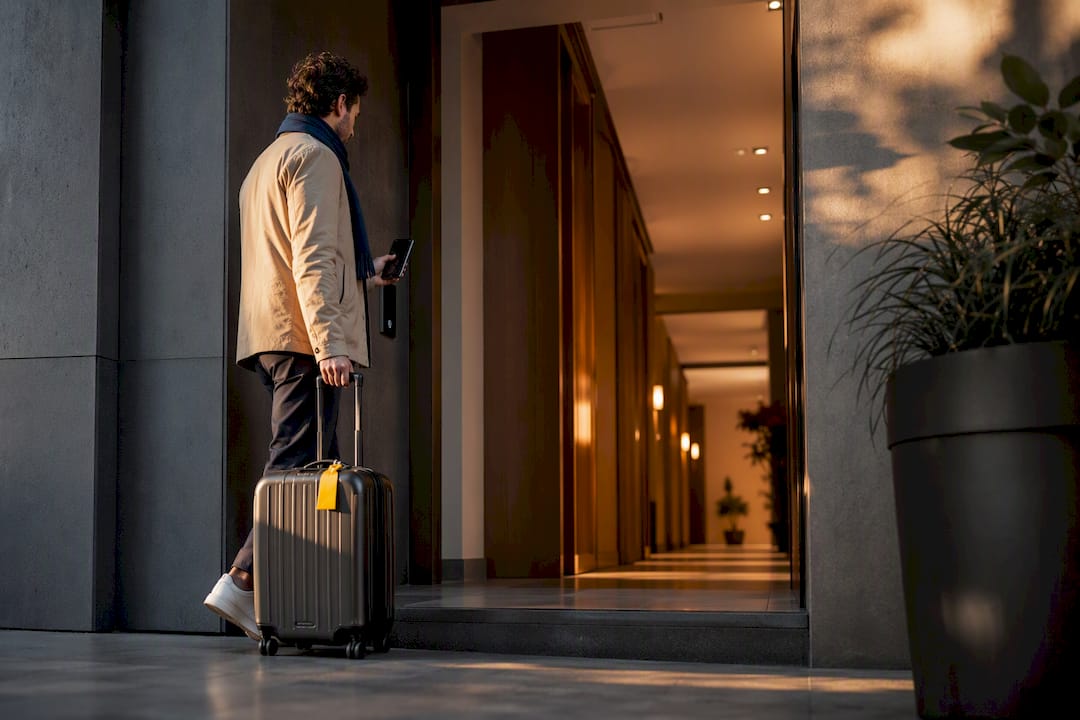


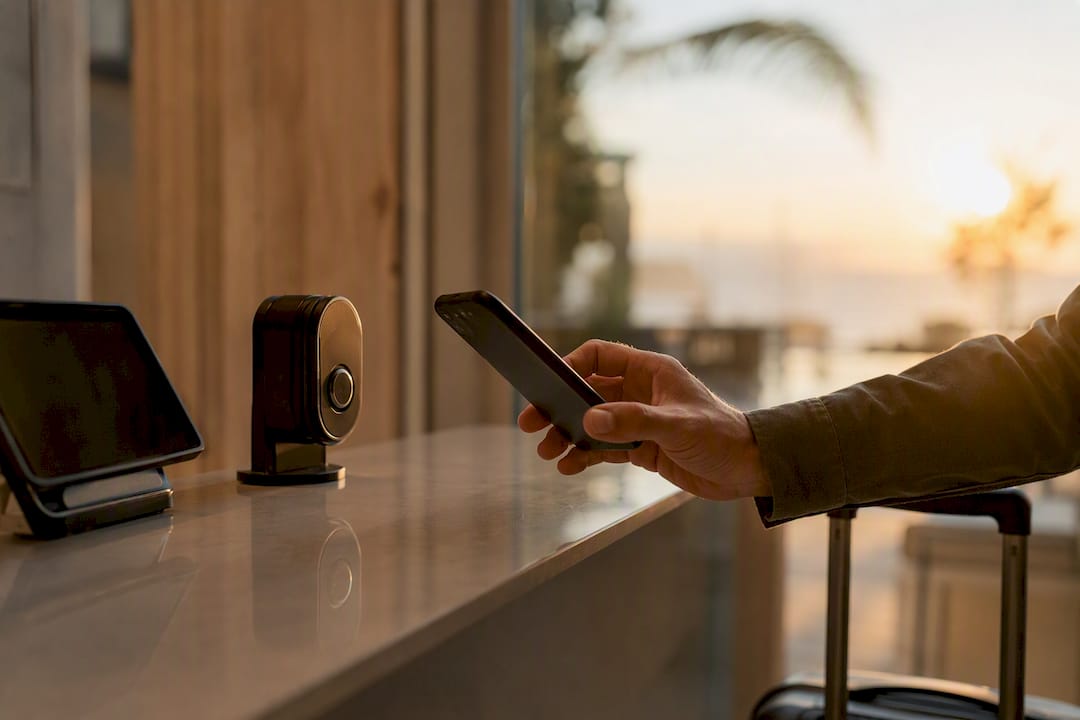
A digital guest guide is a mobile web page, linked directly to a reservation, that walks a traveler through check-in, Wi-Fi, house rules, and local tips without a single text message. Property managers who deploy one see a sharp drop in repetitive guest questions and often a lift in review scores, since guests get instant answers instead of waiting on a host. For Spanish operators, pairing that guide with a platform like Eurocheckin also folds in traveler registration to SES Hospedajes, so the same link that answers “what’s the Wi-Fi password” also keeps you compliant.
TL;DR:
- Digital guest guides can cut routine guest questions by up to 80 percent, freeing staff to focus on higher-value tasks and increasing operational efficiency.
- Embedding links for late checkouts, rentals, or upsells within the guide can boost additional revenue and track guest engagement through open and click metrics.
- Critical content includes check-in instructions, Wi-Fi details, house rules, appliance guidance, emergency contacts, and local recommendations with upsell options.
- Timing guide delivery at booking confirmation, 24 to 72 hours pre-arrival, and via QR code on-site maximizes guest use and reduces support requests.
- For multiple properties, dedicated platforms that synchronize with booking systems and support compliance streamline updates and legal reporting requirements, especially in Spain.
Table of Contents
- Why Digital Guest Guides Deliver Real ROI
- What Belongs in Every Guest Guide
- How and When to Send the Guide
- DIY Template or Dedicated Platform?
- Removing Admin and Legal Risk With Compliance-First Automation
- What Actually Works vs. What Sounds Good on Paper
- Set Up Your Compliant Digital Guest Guide With Eurocheckin
- Sources
- FAQ
Why Digital Guest Guides Deliver Real ROI
The evidence is not marginal. Companies running digital guidebooks report a 40 to 60 percent reduction in routine support calls, and one hospitality group documented an 80 percent decrease in operational questions after rolling one out across its portfolio.
Statistic Callout: Portfolios that switch from ad-hoc texting to a structured digital guide cut routine questions by roughly half, and in the best-documented case, by four out of five.
For a manager running ten units, that gap is the difference between fielding forty messages a week and fielding eight. The hours saved rarely disappear. They get redirected toward pricing, marketing, or acquiring the next property, since staff time shifts from repetitive requests to higher-value work once the guide handles the basics.
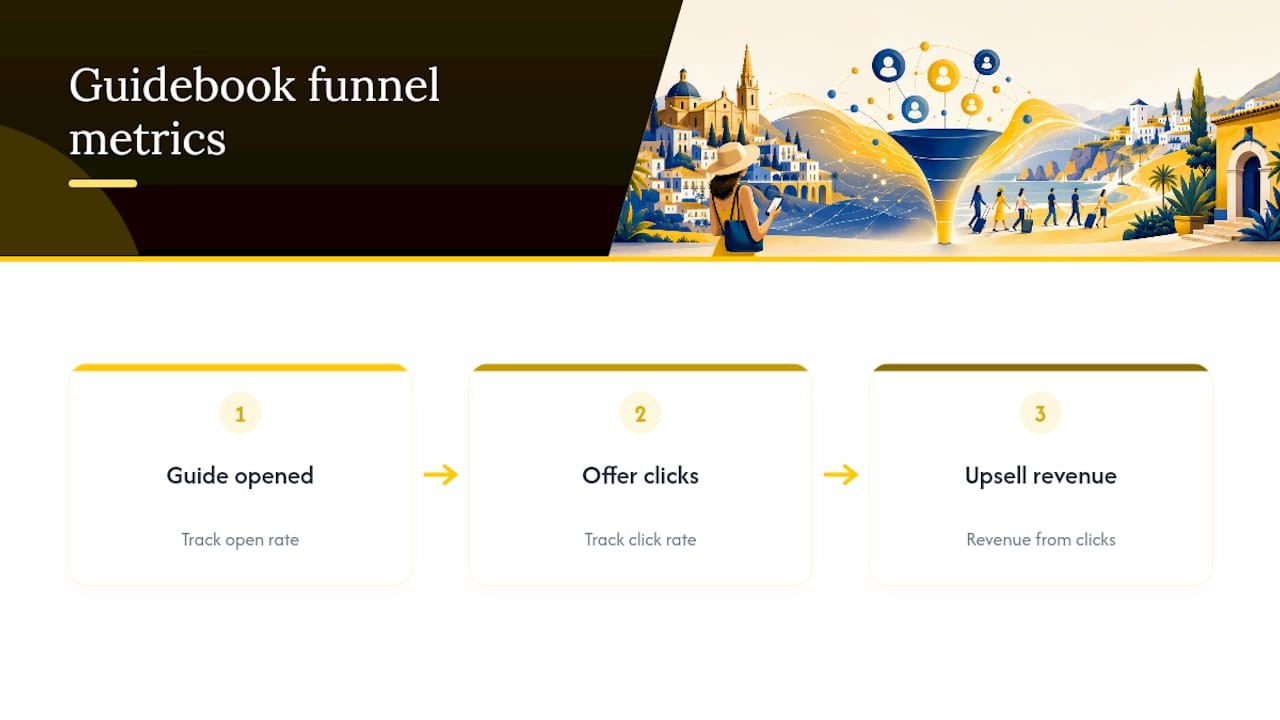
There’s a revenue side too. A well-placed link inside the guide, offering a late checkout, a grocery delivery, or a bike rental, turns a static document into a mid-stay sales channel, and platforms report measurable upsell conversion tied directly to guidebook clicks. Track two numbers from day one: how many guests open the guide, and how many click through to an offer. Those two metrics tell you whether the guide is working or just sitting unread.
What Belongs in Every Guest Guide
A guide only earns its keep if guests actually use it, and that depends on what you put in it. Standard content blocks recommended across platform guides and templates include:
- Check-in and access instructions: door codes, smart lock steps, and a photo of the entrance so nobody stands at the wrong gate.
- Wi-Fi details, placed near the top and formatted so the password can be copied with one tap, plus a quick note on connecting smart TVs or streaming devices.
- House rules and checkout steps, written as plain expectations (quiet hours, trash disposal, key drop location) rather than a legal disclaimer.
- Appliance and amenity instructions, especially anything unusual: a induction stove, a tricky thermostat, or a pool heater with a startup sequence.
- Emergency contacts and maintenance reporting, including who to call for a lockout versus a broken appliance, plus any accessibility notes relevant to the unit.
- Local recommendations, each with a one-line reason it made the list, and space for a tasteful upsell (a partner restaurant, a tour operator) rather than a generic list of nearby attractions.
Pro Tip: Put the Wi-Fi password and the door code above the fold, before anything else. Guests standing outside a locked door in the rain don’t scroll.
How and When to Send the Guide
Timing matters as much as content. Support documentation from booking platforms consistently recommends sending the guide at the moment of booking confirmation, then again 24 to 72 hours before arrival, when the guest is actually planning logistics.
- At booking confirmation, send the reservation-linked guide by email so the guest has it saved before they even pack.
- 24 to 72 hours before check-in, resend the same link by SMS or email, since this is when most guests actually read it.
- On arrival, post a QR code somewhere visible, on the door, the fridge, or a welcome card, so returning guests or those who deleted the email can pull it up in seconds.
- Automate all three triggers through your booking system so nothing depends on you remembering to hit send.
If a property has weak cell signal or hosts guests who skip apps entirely, keep a printed quick-reference card as a fallback. Comparative research on guest preferences confirms that a hybrid digital-plus-printed approach still beats going fully paperless in low-connectivity settings.
DIY Template or Dedicated Platform?
A simple template, built in Google Docs or a free guidebook tool, works fine for a single property or while you’re still testing what guests actually ask about. Once you’re managing three or more units, the manual copy-paste catches up with you fast: every price change, every new door code, every seasonal update has to be repeated across guides.
Dedicated platforms scale because they sync automatically. A booking calendar update pushes to the guide, a new access code updates without you touching each listing, and analytics show you which sections guests actually open. Before choosing one, run it against this checklist:
- Does it sync with your booking calendar and PMS, or require manual updates?
- Does it support multiple languages for international guests?
- Can it integrate with smart locks you already use, or plan to install?
- Does it handle in-guide payments for upsells, not just display them?
- Does it address GDPR and, for Spanish operators, SES Hospedajes reporting?
- Does it give you open and click analytics, or just a static page?
Review the content every season. Local recommendations go stale, prices change, and a stove that got replaced needs new instructions before the next guest arrives confused.
Removing Admin and Legal Risk With Compliance-First Automation
A guest guide solves the communication problem. It doesn’t solve the paperwork problem, and in Spain those are legally connected. Every stay has to be reported to SES Hospedajes under Real Decreto 933/2021, and doing that by hand, property by property, is where most operational time actually leaks.
An automated platform that reports traveler data directly to SES Hospedajes, stores it on GDPR-aligned infrastructure inside the EU, and syncs calendars across a dozen booking channels turns three separate admin tasks into one background process.
That’s the practical case for a platform like Eurocheckin, which pairs the guest guide with automatic SES reporting, smart-lock integration for self check-in, and e-signed digital contracts. Fewer manual entries means fewer transcription errors, which matters at inspection time. The practical test: run one property through it for a month, and compare message volume and check-in speed against the prior month.
What Actually Works vs. What Sounds Good on Paper
Write the check-in section first. Every other page in a digital guest guide is optional polish; the access instructions are the one thing that, if wrong, guarantees a message at 11 p.m. Get that right, automate its delivery, and everything else can improve gradually.
Start narrow: one upsell offer, one metric (guide opens or link clicks), and expand from there. Managers who try to build the “complete” guide on day one usually ship nothing, because perfect local recommendations for every neighborhood restaurant is a bigger project than most people have time for.
Three mistakes show up constantly. Forcing guests to download an app instead of using a browser link kills adoption immediately. Cramming the guide with marketing copy buries the door code guests are actually searching for. And skipping an offline fallback leaves you exposed the one weekend the guest’s phone has no signal.
— Sofía Herrera
Set Up Your Compliant Digital Guest Guide With Eurocheckin
If you’re already comparing templates and standalone guidebook tools, the piece most of them miss is compliance. Eurocheckin is built specifically for property managers who need the guest guide and the legal reporting to work as one system, not two separate chores competing for your evening.
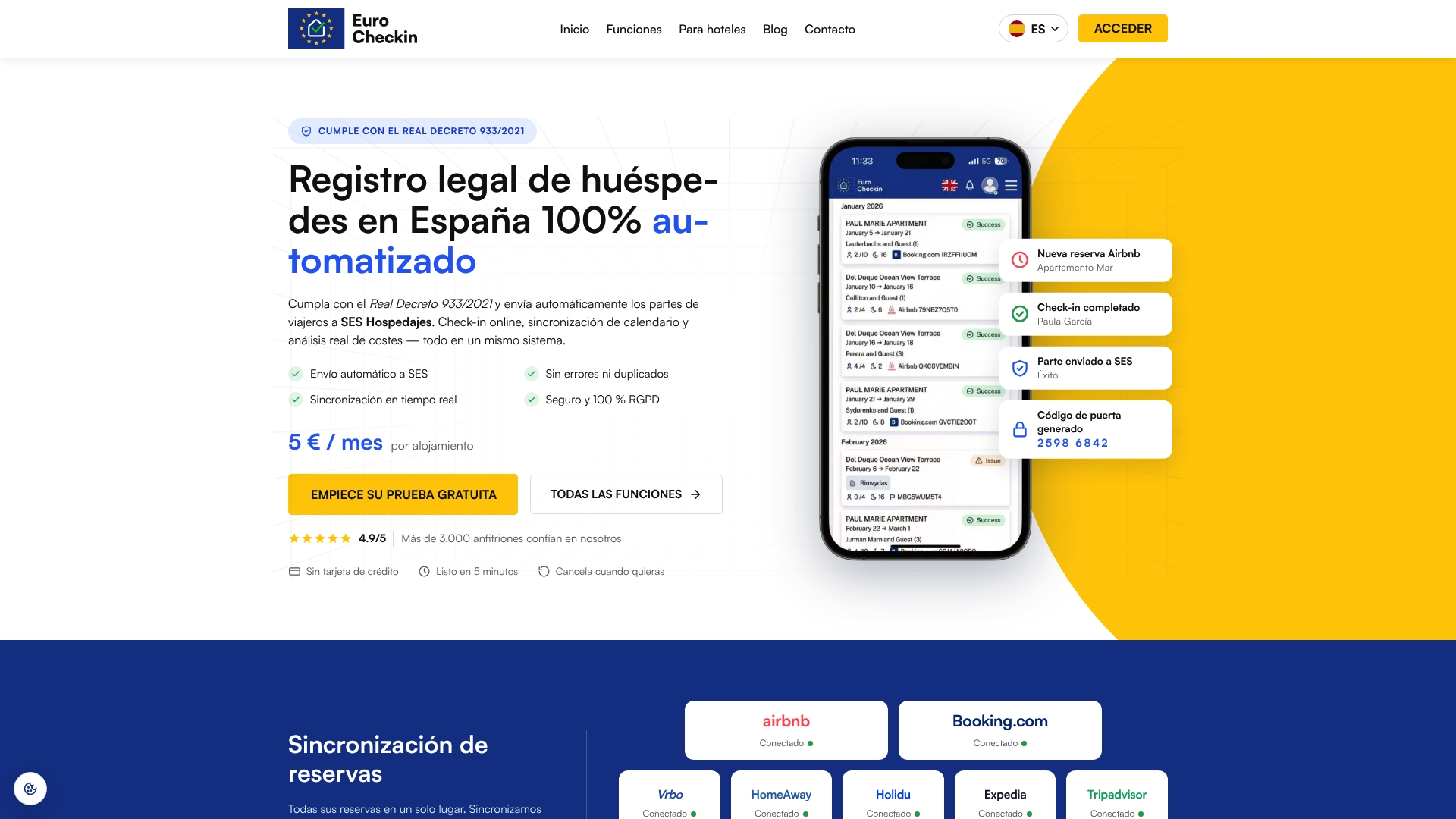
The platform bundles a multilingual digital guest guide with automatic traveler reporting to SES Hospedajes, calendar sync across Airbnb, Booking, Vrbo, and over a dozen other channels, and smart-lock integration with TTLock, Nuki, and Yale for genuine self check-in. Hosts can add a paid upsell, a late checkout, an airport transfer, in about two minutes, with guests paying instantly through Apple Pay or Google Pay. The result operators report: less manual data entry, fewer inbound questions, and a check-in flow that runs without you standing by. Start a free trial on the Eurocheckin check-in platform and run it against one property this month.
Sources
- Digital Guidebooks for Vacation Rentals | SendSquared
- Case Study: How Cabbage Hospitality Group Decreased Operational Questions By 80% With A Digital Guidebook - GoGuidebook Digital Guides
- Digital Guidebook for Vacation Rentals: Everything Guests Actually Want | Jurny
FAQ
What Is a Digital Guest Guide?
A digital guest guide is a mobile-accessible page, usually linked to a specific reservation, that gives travelers check-in instructions, Wi-Fi details, house rules, and local recommendations without needing to message the host.
How Much Does a Digital Guest Guide Reduce Guest Messages?
Documented cases show reductions between 40 and 60 percent in routine support requests, with one case study reporting an 80 percent drop in operational questions.
When Should I Send the Guide to Guests?
Send it once at booking confirmation and again 24 to 72 hours before check-in, then back it up with a QR code posted inside the property for during-stay reference.
Do I Need a Platform or Can I Use a Template?
A basic template works for one or two properties, but a dedicated platform scales better once you’re managing several units, since it syncs updates automatically instead of requiring manual edits everywhere.
Does a Digital Guest Guide Help With SES Hospedajes Compliance in Spain?
The guide itself doesn’t file traveler reports, but platforms like Eurocheckin combine the guest guide with automatic SES Hospedajes reporting so both run from the same reservation data.