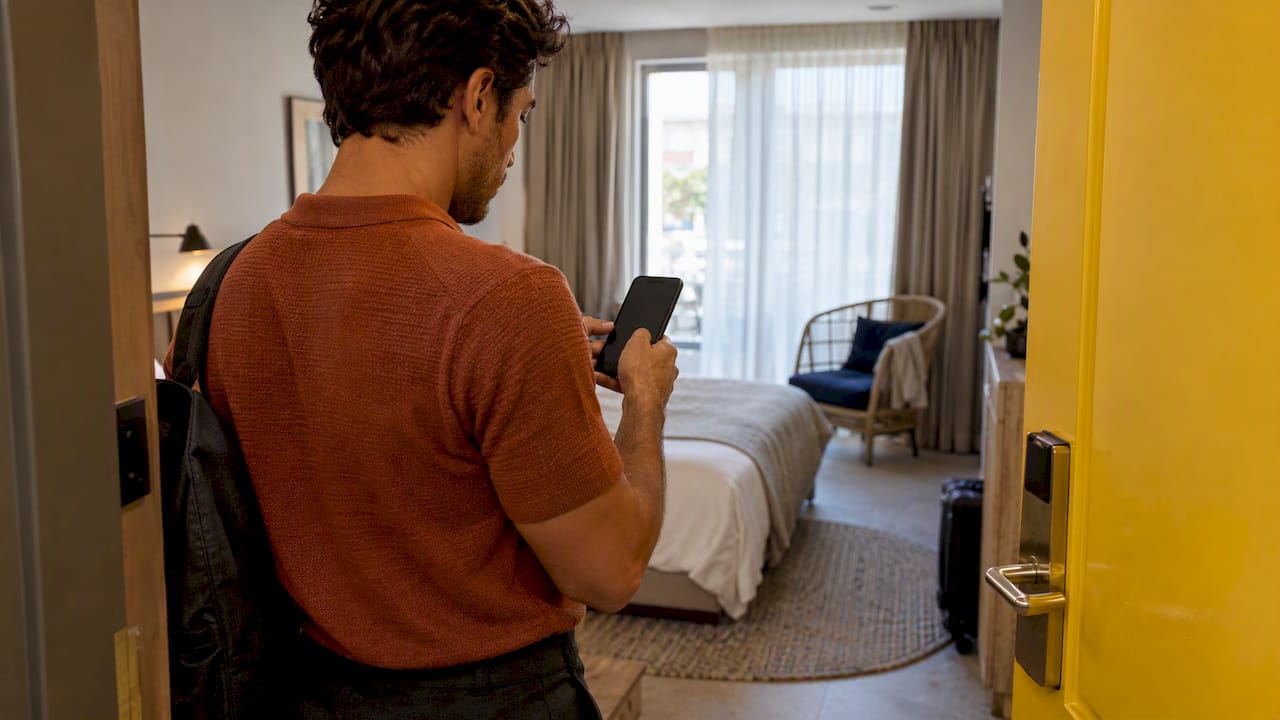



A pre-arrival email sequence is the set of messages we send a confirmed guest before they walk through the door, and the minimal version that works covers booking confirmation, a pre-check-in legal data request, an arrival guide with an upsell, and a final access message. We build this sequence around Real Decreto 933/2021 and AEPD guidance, with tools like EuroCheckin handling the compliance layer automatically.
TL;DR:
- Collect required registration details through a secure online form, not ID scans; verify documents visually on arrival or through secure digital authentication.
- Send registration forms early for advance bookings, immediately after confirmation for last minute stays, and resend automatically when guests leave them incomplete.
- Release smart lock codes and pickup instructions shortly before arrival to limit exposure if booking details change or messages are forwarded.
- Hosts typically act as data controllers, so processor contracts should define responsibilities, and completed registrations should be logged for audit purposes.
- Limit the sequence to one relevant paid extra, such as early check in or an airport transfer, and state its price clearly.
Table of Contents
- The sequence overview: four messages, four jobs
- Timing and triggers: when each message should land
- Compliance and guest data: what to collect and how to verify it
- Automation and implementation: what to hand off and what to check manually
- Revenue and guest experience: the one upsell worth including
- Ready-to-copy templates and subject lines
- Handling multilingual communication in the sequence
- Connecting the sequence to Airbnb, Booking.com, and Vrbo
- Compliance beyond registration: health, safety, and other notices
- Why a modular, automated sequence protects both sides
- Running this sequence without the manual work
- FAQ
- Sources
The sequence overview: four messages, four jobs
Each message in the sequence has one job. When we keep that discipline, guests stay informed without feeling bombarded, and we stay compliant without extra admin work.
- Booking confirmation. Confirm the reservation, send a payment receipt, and tell the guest what happens next.
- Pre-check-in legal form. Collect the mandatory registration data required under Real Decreto 933/2021 through a secure online form.
- Arrival and practical guide. Cover directions, house rules, and one relevant upsell tied to arrival timing.
- Final access message. Deliver smart-lock codes or pickup instructions shortly before arrival.
Splitting the sequence this way keeps legal tasks and welcome tasks in separate lanes. A guest who sees a registration request mixed in with marketing-style welcome copy is more likely to ignore it, and that delay creates compliance risk we can avoid with cleaner structure.
Timing and triggers: when each message should land
Sending the right message at the wrong time defeats the purpose of automation. We recommend building the sequence around fixed windows, then layering in conditional triggers for exceptions.
- At booking, instantly. The confirmation email goes out the moment payment clears, with no delay.
- Ahead of arrival for longer or advance bookings. This is when we send the pre-check-in legal form, giving guests time to complete it without pressure.
- Before arrival. Send a reconfirmation message with a one-click confirm or cancel option. This window turns guest silence into a signal we can act on rather than a guess.
- Shortly before arrival. Send access details, smart-lock codes, or pickup instructions only this close to arrival, since codes and links carry security risk if shared too early.
We also recommend trigger-based rules alongside the fixed calendar: resend the legal form automatically if a guest has not completed it after a reasonable interval, flag late arrivals for a revised access window, and release payment-dependent information only once authorization is fully confirmed. Together, these rules reduce no-shows and keep registration data flowing in on time rather than arriving the night before check-in, when there is no room left to fix errors.
Compliance and guest data: what to collect and how to verify it
Spanish regulation sets out exactly which guest details we need to collect before arrival, and the AEPD has been clear about how to collect them without overreaching on personal data.
Under Real Decreto 933/2021, the mandatory fields include:
- Identity document number and type
- Document issue date
- Full name, gender, and nationality
- Arrival date and signature, where required
The AEPD guidance on guest data collection recommends collecting this information through a secure online form rather than asking guests to send photos or scans of their identity documents. Verifying the ID visually on arrival is often sufficient, provided the primary data has been collected correctly through a digital process beforehand, and the AEPD note on Real Decreto 933/2021 confirms this approach satisfies the required fields in Anexo I when verification happens through secure digital authentication such as SMS codes, email confirmation, or payment-method cross-checks.
We also need to be clear on roles here. Under European Commission guidance, the data controller is the party that decides why and how personal data gets processed, while a processor acts only on the controller’s behalf. As hosts, we typically act as controllers, and any software handling guest data on our behalf needs a contract that spells out processing responsibilities. Keeping legal and registration data in a separate workflow from welcome and access emails makes this accountability far easier to demonstrate if we are ever asked to show our records. Our guide on collecting guest ID online without storing passport scans covers the practical setup in more detail.
Automation and implementation: what to hand off and what to check manually
Automation earns its place in the sequence when it removes repetitive work without removing our oversight. We recommend automating the scheduling of each message, the reminder logic for incomplete forms, delivery of the secure registration form, and calendar synchronization across booking channels to prevent overbookings. What we keep an eye on manually: unusual booking patterns, guest messages that need a human reply, and any registration flagged as incomplete close to arrival.
Three integrations do most of the heavy lifting:
- A secure online check-in form hosted within the EU, so guest data never leaves regulated infrastructure.
- Calendar sync across Airbnb, Booking.com, Vrbo, and other channels, keeping availability accurate everywhere at once.
- Smart-lock delivery for the final access message, so codes generate and expire automatically around the stay dates.
To launch the sequence, work through this checklist: build the four templates, attach the secure registration form to message two, set the timing triggers described above, connect the calendar across all active channels, run a live test booking end to end, and log every completed registration for audit purposes.
Pro Tip: Run one full test booking through the entire sequence before going live, including a deliberately incomplete form, to confirm the reminder trigger actually fires.
Revenue and guest experience: the one upsell worth including
A pre-arrival sequence is also a reasonable place to offer one relevant paid extra, as long as it stays useful rather than promotional. We suggest placing a single offer, such as early check-in, late check-out, or a paid airport transfer, inside the arrival guide or the pre-arrival reconfirmation message.
- Lead with the benefit first: what the guest gains, not what we are selling.
- State the price clearly and keep checkout to one click wherever possible.
- Tie the offer to trip timing, such as “available only for late arrivals,” so it reads as useful information rather than a sales pitch.
One offer, placed once, tends to convert better than several scattered through the sequence, and it keeps the registration and welcome messages from feeling like a marketing funnel.
Ready-to-copy templates and subject lines
Each message below maps to its place in the sequence, with subject-line options for a direct and a benefit-led approach.
- Booking confirmation. “Your reservation is confirmed. Here’s what happens next.” We confirm the dates, the amount paid, and a short note on what arrives next. Subject lines: “Booking confirmed for [dates]” or “You’re all set for your stay.”
- Pre-check-in legal form. “Please complete your registration before arrival.” We explain that Spanish regulation requires each guest’s name, document number and type, nationality, gender, and arrival date, and we link to a secure form. Subject lines: “Quick step before your stay” or “Complete your check-in details before arrival.”
- Arrival guide with upsell. “Everything you need for arrival, plus one option worth knowing about.” We cover directions, access notes, house rules, and the single upsell offer. Subject lines: “Your arrival guide is ready” or “Arriving soon? Here’s your full guide.”
- Final access message. “Your door code and arrival details.” We send this shortly before arrival with the live access code or pickup instructions. Subject lines: “Your access code is ready” or “Last step: how to get in.”
Keep the mandatory registration fields fixed regardless of language or branding. Everything else in the templates can be localized freely.
Handling multilingual communication in the sequence
Guests arriving from different countries expect messages in a language they understand, and that applies to every stage of the sequence, not just the welcome guide. The registration form carries the most risk here: if a guest misunderstands a field because of a translation gap, we end up with incomplete or inaccurate data that someone has to chase down manually.
We recommend detecting the guest’s language automatically from the booking platform data where possible, then sending every message in the sequence, including the legal form, in that language. Automated translation tools can cover less common languages, but the mandatory fields on the registration form (document type, number, nationality, and the rest) benefit from professional or carefully checked translations, since errors there create compliance gaps rather than just awkward phrasing. Access instructions and house rules are worth the same care, particularly safety-related notes that a guest needs to actually understand, not just skim.

Connecting the sequence to Airbnb, Booking.com, and Vrbo
Most pre-arrival sequences break down at the handoff between the booking platform and our own communication system. A reservation confirmed on Airbnb, Booking.com, or Vrbo needs to trigger the sequence automatically, without us copying guest details into a separate tool by hand.
Connecting each channel’s calendar and booking data to a shared system keeps the triggers in this guide accurate: the confirmation email fires the moment a booking lands, regardless of which platform it came from, and the legal form goes out on the same schedule across every channel. This also solves the overbooking risk that comes from managing multiple calendars separately, since a change on one platform updates availability everywhere else. Our walkthrough on building a compliant check-in form for Vrbo covers the setup for hosts working across several booking channels at once.
Compliance beyond registration: health, safety, and other notices
Guest registration is the most visible legal requirement, but it is not the only one. Depending on the type of accommodation, hosts may need to include health and safety notices in their pre-arrival or arrival communication, such as fire safety instructions, emergency contact numbers, or evacuation information for the property.
These notices fit naturally into the arrival guide, alongside directions and house rules, rather than as a separate message that risks being skipped. Filing guest registration data on time matters just as much as collecting it correctly: our guide on filing guest registration in Spain explains the reporting window hosts need to meet to avoid penalties. Retention of guest data also falls under these broader obligations, and our piece on GDPR guest data retention for Spanish hosts walks through how long records need to be kept and why.
Why a modular, automated sequence protects both sides
We think the biggest mistake hosts make is treating the pre-arrival sequence as one long email instead of four distinct jobs. Compliance tasks and welcome tasks solve different problems, and mixing them slows guests down on both. A registration form buried inside a cheerful arrival guide can be easier to overlook than one sent on its own.
Automation only pays off when we still test the flow ourselves and keep a record of what was sent and when. That audit trail matters as much for a tax inspection as for a guest dispute. Test the full sequence periodically.
— Sofía Herrera
Running this sequence without the manual work
We built EuroCheckin to automate guest check-in while keeping the compliance work correct in the background. Guest data collected through our secure online form reports to SES Hospedajes with one click, satisfying Real Decreto 933/2021 without anyone retyping a single field. Calendar sync across Airbnb, Booking, Vrbo, and other channels keeps availability accurate, and smart-lock integration with TTLock, Nuki, and Yale handles the final access message automatically.
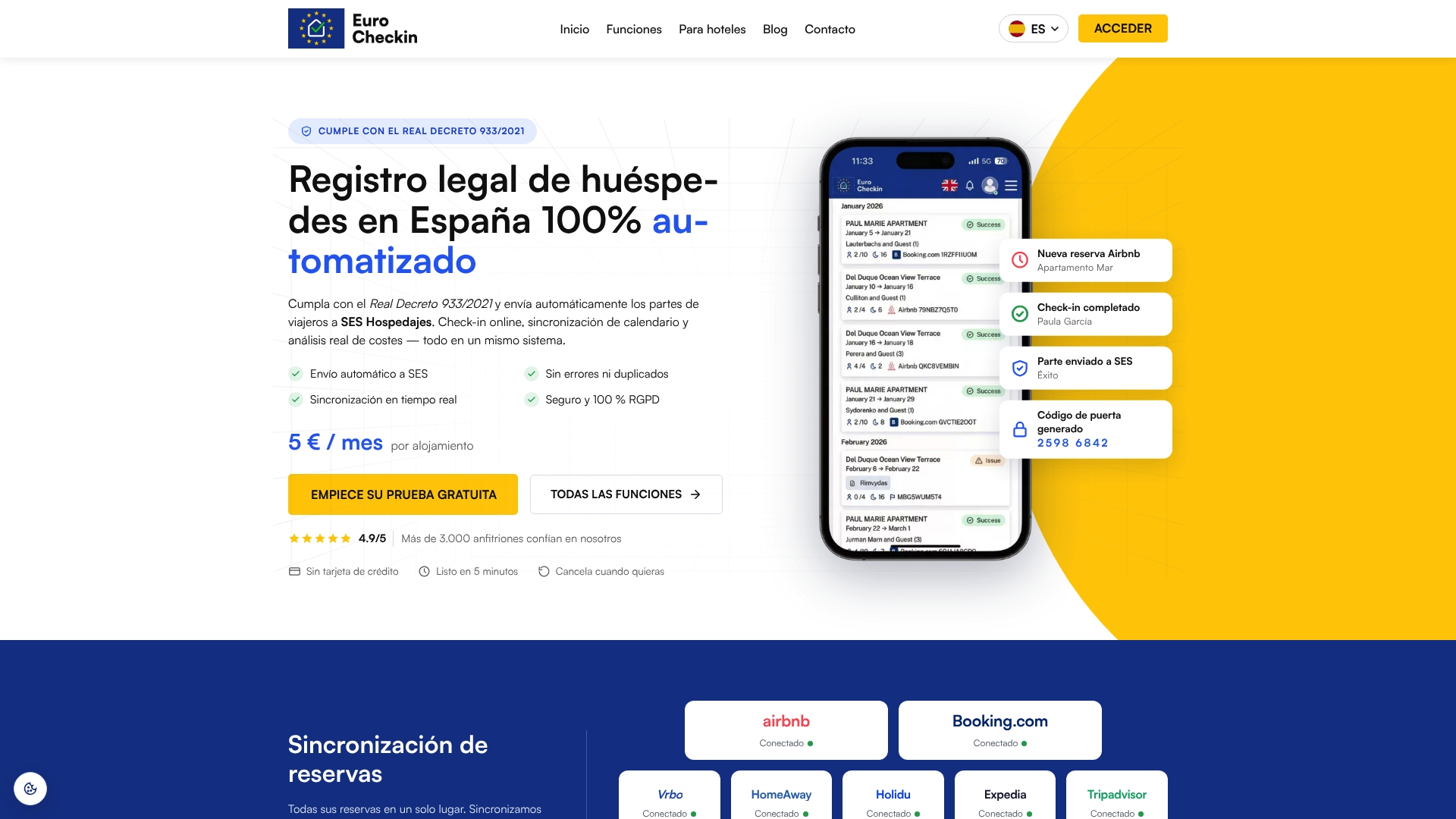
That combination means fewer manual steps between a confirmed booking and a guest standing at the door with a working code, and a lower chance of a registration slipping through the cracks. Plans for vacation rentals start from 5 EUR per month per accommodation, and hotel plans run from 3 EUR per month per room, both with a free trial. If registration alone is the priority, our SES Hospedajes reporting service starts from 79 EUR one-off per accommodation. Explore the full feature set and see which plan fits your property.
FAQ
What is a pre-arrival email sequence for guests?
A pre-arrival email sequence is a set of messages sent to a confirmed guest before their stay, covering booking confirmation, mandatory legal registration, arrival logistics, and final access details. It is separate from any general marketing list and focuses only on guests with an active reservation.
When should we send the legal registration form to guests?
We recommend sending the registration form well ahead of arrival for longer bookings, giving guests time to complete it without pressure. For last-minute bookings, send it immediately after confirmation so there is still time to follow up if it goes incomplete.
Do we need to collect a copy of the guest’s ID?
No. AEPD guidance recommends collecting the required fields through a secure online form rather than requesting scans or photos of identity documents, with verification often handled visually on arrival or through secure digital authentication.
When should we send smart-lock codes or access details?
Send access details shortly before arrival, not earlier, since codes and links carry more security risk the longer they sit unused in a guest’s inbox. This timing also keeps the information current if a booking changes close to arrival.
How many upsells should the sequence include?
We recommend one clear, relevant upsell, placed either in the arrival guide or the pre-arrival reconfirmation message. A single well-timed offer tends to read as helpful, while multiple offers scattered through the sequence start to feel like a sales pitch.