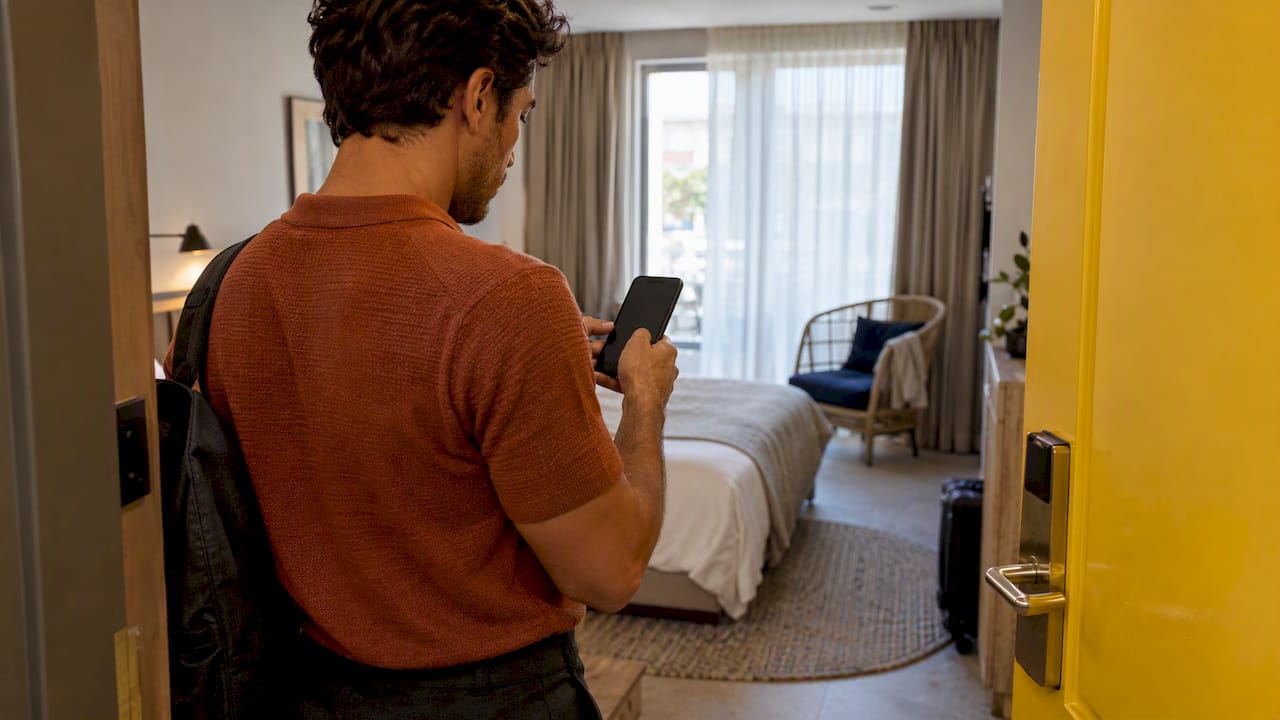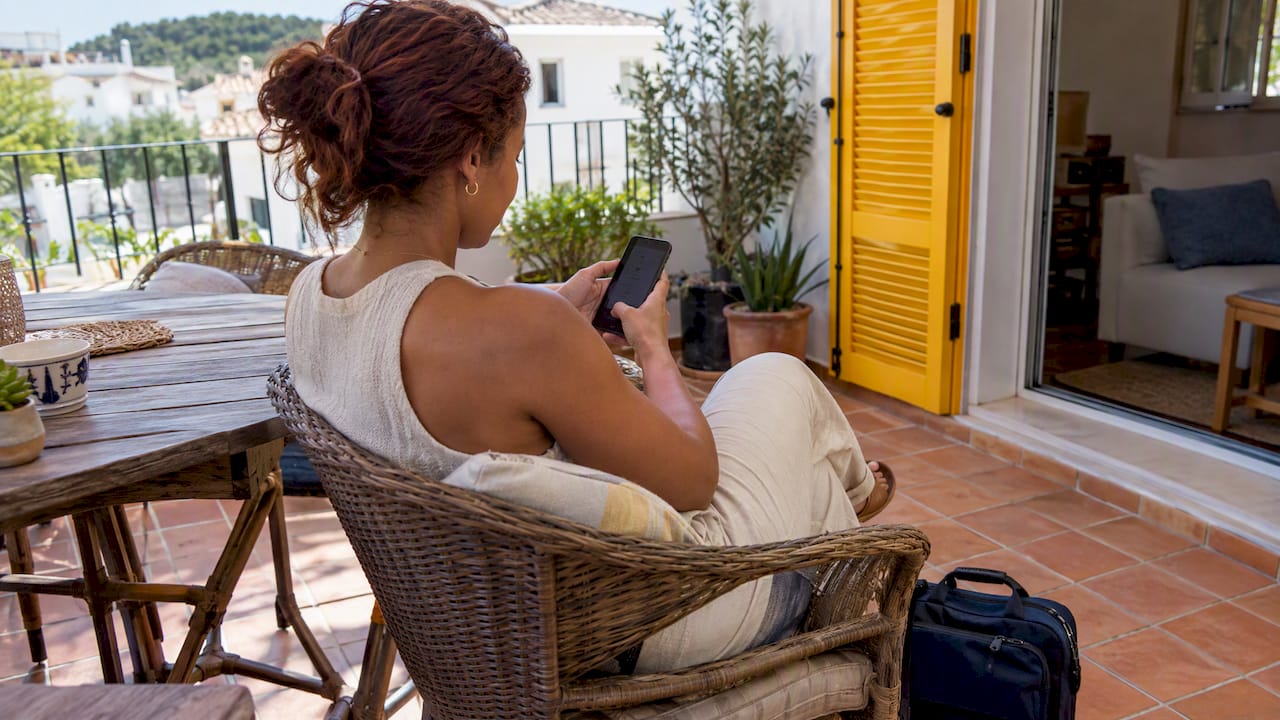


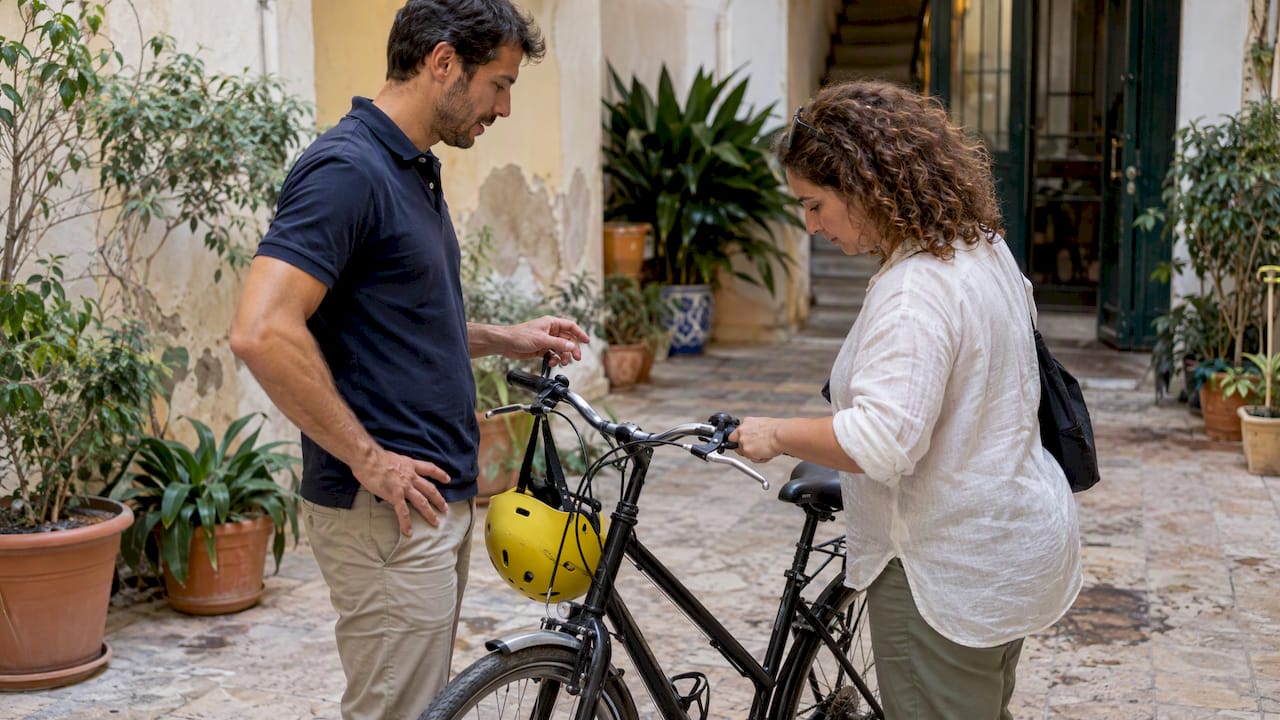
To upsell to guests, offer a paid extra or upgrade that fits the stay they already booked, ask at the right moment, and make buying take seconds. Late check-out, an early arrival, airport transfers, a welcome basket and local experiences are the usual starting points. The best moment is not at the front desk. It is between the booking and the arrival, ideally inside the online check-in that guests in Spain must complete anyway.
This guide is for owners and managers of tourist accommodations, hostels and hotels. It covers what to sell, where to place the offer, how to word it, how to handle consent under the GDPR, and how to know whether it works.
TL;DR
- Sell extras that solve a real problem for the guest (arrival time, luggage, transport, comfort), not generic add-ons.
- Make the offer before arrival and inside a step the guest already completes, such as online check-in, instead of relying on a conversation at the door.
- Keep payment to a few taps. Apple Pay and Google Pay remove most of the friction on a phone.
- Under the GDPR, marketing consent must be an affirmative action by the guest, never a pre-ticked box.
- Track attach rate and revenue per stay for each extra, and drop what does not sell.
Table of Contents
- What upselling means in a rental, hostel or hotel
- Why the pre-arrival window matters most
- What to sell: extras that work
- Where to place the offer in the guest journey
- How to word the offer
- Collecting payment without friction
- Consent and the GDPR when you sell digitally
- Our perspective: put the offer where the guest already is
- Step by step: launch your first three extras
- Measuring results
- Common mistakes
- How EuroCheckin supports this
- FAQ
- Sources
What upselling means in a rental, hostel or hotel
Two terms are often mixed up. An upsell moves the guest to a better version of what they booked: a larger room, a higher floor, a flexible rate. A cross-sell or add-on sells something extra alongside the stay: breakfast, parking, a bike rental, a private tour. In vacation rentals the line is blurry, and it does not matter much. What matters is that the guest pays more because the offer is useful to them.
The revenue potential is real, but the evidence comes mostly from hotels. A 2025 study by Amadeus, reported by silicon.de, found that hotels could raise their average daily rate by about 12% by selling their best features and services, and that 63% of guests were willing to pay extra for specific features such as a particular view or floor. Treat those figures as an indication of demand in hotels, not as a promise for your property. A small apartment will not see the same numbers as a mid-range hotel with many room types.

There is also a gap between intention and execution. According to the Guest Value Report 2026, covered by GASTRO.at, more than 20% of top hotels in Germany offer no extras at booking, and only about 10% of those that want more revenue per guest actually measure the result. The same pattern is common in small rentals: a few extras exist, but nobody tracks whether they sell.
Why the pre-arrival window matters most
Most owners think of upselling as something that happens during the stay: a recommendation at reception, a note on the kitchen table. Experts quoted by Smart Hotel Key point out that, although most extra revenue is generated during the stay, the biggest untapped opportunity is the phase between booking and check-in, when guests are most receptive to upgrades and personalized experiences.
There are practical reasons for this:
- The guest is still planning. They have not yet decided how to get from the airport or where to have dinner on the first night.
- Logistics can still be arranged. A late check-out or an early check-in is only possible if you know in advance.
- You do not need to be there. A well-built digital offer works at 11 p.m. on a Sunday without anyone answering a message.
A guest in Spain already has a mandatory task before arrival: sending traveler data for the guest register. If you want to understand how that step works and why it should happen before arrival, see our page on pre check-in versus on-site check-in. That same moment, when the guest is already on their phone and engaged, is a natural place for an offer.
What to sell: extras that work
Start with what costs you little and solves a clear problem. Here is a practical list by type of accommodation.
| Extra | Best for | Why guests buy it | What to check first |
|---|---|---|---|
| Early check-in | Rentals, hostels, hotels | Flights land in the morning, rooms are not ready | Cleaning schedule and previous night’s occupancy |
| Late check-out | All | Afternoon departures, no wish to carry luggage | Next arrival date |
| Luggage storage | City apartments, hostels | Time between check-out and departure | Secure space |
| Airport or station transfer | Rentals, boutique hotels | Certainty on arrival, no taxi queue | Reliable local driver |
| Welcome basket or groceries | Rentals | Food waiting on arrival | Supplier and lead time |
| Breakfast or pastries | Rentals, hostels | Easy first morning | Local bakery or kitchen capacity |
| Parking | City properties | Hard to find in many Spanish city centers | Space or agreement with a car park |
| Experiences and tours | Rentals, hotels | Local activities already vetted | Partner reliability, cancellation terms |
| Extra cleaning, linens, baby cot | Longer stays, families | Comfort | Stock and labor cost |
| Room upgrade | Hotels, hostels | Better view, quieter floor | Real availability |
Two rules keep this list honest. First, never sell what you cannot deliver reliably: a late check-out sold when a guest arrives at 3 p.m. creates a bad review, not revenue. Second, check your local rules. Some services, such as transport or food, may be subject to specific requirements, so confirm them with your local authority or advisor before launching them.
Improve the product before you sell it
Experts on guest value argue that guests do not spend more because of a new sales metric. They spend because the offer, the quality of the experience and the personalization of the message are appealing, according to Smart Hotel Key. In practice, a photo of a real breakfast, a clear description and a fair price will sell better than a clever script. If the extra is mediocre, fix it before promoting it.

Where to place the offer in the guest journey
Each touchpoint has a different job. Use all of them, but do not ask for the same thing everywhere.
- Booking confirmation message. Mention that extras are available and that you will send the details. Do not overload it.
- Online check-in. This is the strongest moment. The guest is filling in their details, is committed to the trip and is already on a phone. A menu of extras here converts better than a separate email because there is no extra click or login.
- Digital guest guide. Guests consult it before and during the stay. Recommendations for services, with a clear option to book, fit here. See how a digital guest guide can also reduce repeat questions.
- Day before arrival. A short reminder with the one or two extras that matter most for that stay (for example, late check-out if the guest has an evening flight).
- During the stay. Sell experiences, extra cleaning or a late departure. Keep it light.
- After the stay. Do not sell. Ask for a review and invite a direct rebooking.
One study on digital habits in European hotels, summarized by HOGAPAGE, found that 66% of guests asked for hotel apps or digital guides to access services, ahead of online check-in (42%) and digital payment (36%). The same article describes upselling that depends on staff recommendations alone as a lost opportunity compared with integrating it into digital touchpoints such as online check-in. The study is about hotels, but the logic applies to any accommodation where the guest arrives with a phone in hand.
How to word the offer
The fear of looking pushy stops many hosts. A common worry in hotel forums is the embarrassment when a guest declines. A digital offer solves most of that: the guest says no by not tapping, and nobody is embarrassed.
For the text itself:
- Start with the guest’s situation. “Landing before noon? Add early check-in” works better than “Upgrade your experience.”
- Give the price and what it includes. No surprises at payment.
- Offer two or three options, not twelve. A short menu is easier to scan on a phone.
- Use the guest’s language. A menu in English, German or French sells more to guests who speak those languages than a Spanish-only page.
- Be honest about availability. If late check-out depends on the next booking, say so or only show it when it is possible.
About pricing, there is a useful finding for owners who fear that variable prices will upset guests. In a study on dynamic pricing from the guest’s perspective, Kohl & Partner reports that only 8.3% of guests in the Alpine leisure sector considered dynamic pricing unfair, and that clear communication made these models acceptable to most. The context is the Alps, not Spain, but the lesson holds: explain what the guest pays for, and the price becomes less of an issue.
Collecting payment without friction
An extra that requires a bank transfer, an exchange of messages and a cash handover at the door loses sales. The fewer steps between “yes” and “paid”, the more guests complete the purchase. Card payment inside the same flow, with Apple Pay or Google Pay, takes a few seconds. If you are comparing ways to collect guest fees online in Europe, our guide on collecting guest fees online explains the options for European hosts.
Payment also helps with operations. When an extra is paid in advance, you know what to prepare, and you avoid asking for cash on arrival or chasing unpaid balances after departure.
Consent and the GDPR when you sell digitally
Selling extras to a guest is one thing. Sending them marketing messages later is another. Keep them apart.
- Selling an extra the guest asks for rests on the contract with the guest.
- Sending promotions afterwards normally needs consent.
For consent, the Spanish data protection authority states that the GDPR requires it to be unambiguous, given by a statement or a clear affirmative action, which rules out tacit consent. See the AEPD’s explanation. In practice:
- Do not use a single “I have read and accept the privacy policy” box for everything.
- Separate the purposes: the legally required guest registration, the stay contract, and marketing.
- Leave marketing boxes unticked. The guest must tick them.
- Keep a record of when and how each guest consented.
Guest registration data collected for the Spanish authorities has its own legal basis and is not a license to send promotions. Our article on the lawful basis for hotel GDPR explains the difference. For specific cases, ask your data protection advisor.
Our perspective: put the offer where the guest already is
We build EuroCheckin around one observation: every guest who stays in Spain has to complete a registration step before arrival. That step is unavoidable, so it is the most reliable point of contact you will ever have with a guest. Hosts who send a separate email with a list of extras compete with dozens of other messages. Hosts who place the extras inside the check-in flow reach the guest while they are already paying attention.
For us, the principle is simple. Compliance comes first: the guest data goes to SES Hospedajes without manual work, and the guest register is digital. Revenue comes second, built on the same flow. A host should be able to add a new service in about two minutes, without an IT team, and the guest should be able to pay with Apple Pay or Google Pay. If you want to see how this looks in practice, read about the extra services menu in the check-in flow.
We also think owners should be careful with the word “upsell”. The extras that work are the ones a guest would have asked for if they had thought of them. Start there, and revenue follows.
— Sofía Herrera
Step by step: launch your first three extras
- Pick three extras. Choose from the table above: one about time (late check-out or early check-in), one about comfort (welcome basket, parking) and one about the destination (a tour or transfer).
- Set cost and price. Calculate your real cost, including labor and supplier fees, and add a margin. Write the price in euros with VAT treatment confirmed by your tax advisor.
- Define limits. Maximum quantity per day, lead time needed, and conditions for refusal.
- Write short descriptions. One sentence about the benefit, one about what is included, and the price.
- Add real photos. A single photo of the actual item beats a stock image.
- Place the menu inside online check-in. The guest sees it right after entering their details.
- Test it yourself. Go through the guest flow on a phone, in two languages if you serve international guests.
- Review after one month. Count how many guests saw each extra and how many bought it.
Measuring results
Because so few businesses measure upselling, measuring puts you ahead. Track four numbers per property:
- Attach rate: the share of stays that bought at least one extra.
- Extra revenue per stay: total extras revenue divided by the number of stays.
- Revenue by extra: which items carry the business and which ones add only clutter.
- Check-in completion rate: if guests do not finish the online check-in, they do not see the offers. A pilot we describe in our article on online check-in conversion is a good reference for improving that first step.
A simple example with invented numbers, for illustration only: if an apartment has 60 stays a year and 20% of guests buy a €25 late check-out, that is 12 sales and €300 of extra revenue. Add a welcome basket bought by 10% of guests at €40 and you reach another €240. The numbers are modest, and the point is that they come without extra staff time once the system runs.
Common mistakes
- Asking too late. An offer sent on arrival day leaves no time to prepare.
- Too many options. Choice paralysis lowers conversion.
- Selling what you cannot deliver. One failed late check-out costs more than the fee.
- Mixing consent. A bundled checkbox is a compliance risk.
- Ignoring language. An English-speaking guest will skip a menu written only in Spanish.
- Never measuring. Without data, you cannot tell which extras to keep.
How EuroCheckin supports this
EuroCheckin is a platform for property owners and managers in Spain. It sends guest data to SES Hospedajes automatically, runs unlimited multilingual online check-in, and lets you create and sell your own extra services that guests pay for with Apple Pay or Google Pay. It also offers a digital guest guide, digital contracts with e-signature and integration with Nuki, TTLock and Yale smart locks.
The EuroCheckin plan for accommodations costs €5 per month per accommodation, with a free trial. Hotels can look at the plan for hotels, priced at €3 per month per room. If you still need to register with SES Hospedajes, we also offer a registration service from €79 one-off per accommodation.
FAQ
What is the main rule of upselling?
Offer something that is useful to the guest, at a moment when they can act on it. A good extra solves a problem the guest already has. If the offer only benefits you, it will feel pushy and it will not sell.
When is the best time to upsell to guests?
Between booking and arrival, and especially during online check-in. Experts cited by Smart Hotel Key identify this pre-arrival phase as the most overlooked opportunity. Guests are planning the trip, and logistics such as arrival time or transfers can still be arranged.
What are good examples of upselling in a vacation rental?
Early check-in, late check-out, luggage storage, airport transfers, a welcome basket, parking and local experiences. Start with two or three that you can deliver every time, and add more once you see which ones sell.
Do I need guest consent to offer extras?
Selling an extra that the guest requests does not require marketing consent. Sending later promotional messages usually does, and the consent must be a clear affirmative action, not a pre-ticked box, according to the AEPD. Ask your data protection advisor about your specific case.
Sources
- Hoteliers could raise room prices by 12% (silicon.de, Amadeus study)
- Hotels leave guest revenue potential untapped (GASTRO.at)
- Guest Value: does the hotel industry measure the wrong things? (Smart Hotel Key)
- Study on digitalization in hotels (HOGAPAGE)
- Dynamic pricing from the guest’s perspective (Kohl & Partner)
- How must consent be requested under the GDPR? (AEPD)